The MuCo Future (Part 6)

Workings – 1

Let’s dig deeper into the inner workings of MuCo. To make it simpler, we will first assume MuCo is operating in the Web 2.0 world – the current Internet as we know it. We will then later morph MuCo into a Web3 entity. The best way to look at MuCo is to follow the money and tokens (or points).

Think of MuCo as a Mu factory. It takes fiat currency as input and produces Mu. The Mu can then be distributed by the buyers (brands) to their customers – MuCo has no control over that process. MuCo maintains a centralised database which tracks the flow of Mu (from source to destination). End consumers have to come to MuCo to use the Mu – they begin by activating it by identifying themselves (email address, mobile number) to claim the Mu that has been given to them by brands. Thus, brands and consumers have “wallets” and transactions are stored in a database. This is almost identical to how current loyalty programs work.

Consumers will then want to redeem Mu. For this, MuCo will need to run a market of offerings from brands. This can work in two ways: either MuCo ‘buys’ the products from brands and ‘sells’ it to customers (like a Mu Shop) or brands can themselves sell directly to customers (in a Mu Marketplace). In the latter scenario, brands get Mu in return for their ‘experience’ offerings.

This is quite straightforward. MuCo derives its revenues selling Mu. With enough Mu out there, brands will find it to their benefit to create offerings for consumers. Mu works across brands – that is its true utility.

The limitations of the above approach are that there is dependency on MuCo for maintaining the integrity of Mu. Brands and consumers have to implicitly trust MuCo that it will not in any way debase the value of Mu or charge a ‘tax’ on transactions.

One point not discussed above is the price at which Mu gets sold by MuCo. Ideally, this should be via an auctions process so there is price discovery. But that will probably take time because it will need enough demand generation and therefore interest from multiple bidders. Until then, MuCo may need to set an arbitrary price and sell as brands ask for Mu.

MuCo is thus running a 2-sided marketplace between brands and consumers. The challenge such marketplaces face is the ‘cold start’ problem – creating enough demand on both sides to get activity going. To overcome this problem, MuCo may need partners who can help accelerate the process of getting Mu in the hands of consumers. It will also need to create an attractive shop to get consumers to see the value and utility of Mu before brands start coming in with their own offerings. This is where MuCo will need initial capital to bootstrap itself.

Thinks 588

Vinod Khosla: “Every major area has been innovated by high-risk experiments, whose chances of getting off the ground were very low. Take Airbnb. In 2007-08, if you’d said people would just let a stranger into their house, into their spare bedroom . . . give me a break! Luckily for them, what happened was we had the financial crisis in 2008, just when they were getting going. Suddenly, the proposition wasn’t: will somebody let a stranger into their house in their spare bedroom? The choice, for about 10 per cent of the people in the US at least, was: my mortgage is under stress; do I lose my house or let a stranger in? Given that choice, they didn’t want to lose their house. I recently asked [Airbnb co-founder] Joe Gebbia this question and he said: “Absolutely right, people who would never consider letting a stranger into their house did, because the alternative was losing their house and not being able to pay their mortgage right after the crisis.” So luck plays a role, but also innovation plays a role. Almost all societal large progress happens because of some improbable.”

Arthur Laffer and Stephen Moore: “Catalysts for inflation vary—excessive government spending, printing too much money, currency devaluations, specific and general shortages of goods and services. Once embedded in an economy they can create long-lasting inflation. The secret to curing inflation isn’t economic collapse and high unemployment but the opposite: pro-growth policies that create incentives for more goods, more employment, less government spending and sound money. As the economy produces more, prices go down. Conversely, austerity means less goods produced and less employment. How does putting people out of work and reducing the supply of goods cause the prices of goods to fall?”

Rui Ma: “In fast fashion, there’s something known as the “impossible triangle.” It’s the perfect production scenario, where a company can 1) quickly onboard lots of new styles at 2) low prices, while 3) being hyper-efficient in managing massive volumes of inventory. Unlike Shein, those other upstarts didn’t quite crack the third edge of that triangle. And that’s what left them trailing — according to Crunchbase — the fourth most-valuable tech startup in the world, with an estimated $100 billion valuation.”

The MuCo Future (Part 5)

LETS

My friend, Atanu Dey, had once told me about LETS (Local Exchange Trading System). It traces its origins to Michael Linton in 1983 in British Columbia. According to Investopedia: “Local Exchange Trading Systems (LETS) are locally organized, economic organizations that allow the exchange of goods and services among group members. The groups use a locally created units of value as currency which can be traded or bartered in exchange for goods or services. Members of LETS typically view the systems as organized and cooperative schemes that maximize purchasing power while benefiting members and the community.” From Slow Movement: “Instead of money LETS use ‘community credits’. People earn LETS credits by providing a service and they spend their credits on whatever is offered by other people in the scheme e.g. childcare, transport, food, trade services or home repairs. Where there has been a financial outlay to provide the service eg purchase of wood to make a box, the recipient pays for the wood, but not the service of making the box.”

Wikipedia adds:

A list of services offered by network members is put together to create a LETS scheme, and trading takes place between members using a local currency. The LETS foundation is a virtual currency, a check book, a directory as well as a transparent accounting system built on trust and community regulation. The first LETS required nothing more than a telephone, an answering machine and a notebook. Since then, there have been several attempts to improve the process with software, printed notes, and other familiar aspects of traditional currencies.

  1. Local people set up an organization to trade between themselves, often paying a small membership fee to cover administration costs
  2. Members maintain a directory of offers and wants to help facilitate trades
  3. Upon trading, members may ‘pay’ each other with printed notes, log the transaction in log books or online, or write cheques which are later cleared by the system accountant.
  4. Members whose balances exceed specified limits (positive or negative) are obliged to move their balance back towards zero by spending or earning.

LETS is a full-fledged monetary or exchange system, unlike direct barter. LETS members are able to earn credits from any member and spend them with anyone else on the scheme. Since the details are worked out by the users, there is much variation between schemes.

MuCo can be thought of as creating a LETS-like trading system. Think of it as a two-sided system. Consumers have time, personal information, their social networks, and their recommendations to offer – attention, data, network and voice. Brands can benefit from all of these. But they have no easy way to compensate customers for these. They could use points as part of their existing loyalty programs, but there are two constraints: rewards for these non-monetary actions need to be much smaller than what is possible via the loyalty programs, and not all businesses have loyalty programs. The way to solve this problem is to create a pan-brand solution delinked from money – that is where Mu as points or tokens comes in. Micro-incentives for small, in-the-flow actions all add up to enable a meaningful aggregate for consumers who can now be offered an array of ‘priceless’ experiences by the brands at close to zero cost. MuCo thus creates a LETS-like market where there is none today, a win-win for both brands and customers.

Thinks 587

NYTimes on 10 years of CRISPR: “The gene-editing technology has led to innovations in medicine, evolution and agriculture — and raised profound ethical questions about altering human DNA.”

WSJ on hypercasual games: “Mobile games that require little brainpower to play are becoming more sophisticated as their publishers try to cling on to fickle—and monetizable—players…“Hypercasual is still in its genesis phase with so much runway to be innovated on around this wonderfully pure notion of essentially a single gameplay loop,” said Clive Downie, senior vice president and general manager at Unity Technologies Inc., a 3-D content development platform that is used by hypercasual game designers. “Developers are looking for additional ways to add complexity and challenge to games.” Hypercasual’s popularity has boomed in the past two years. The number of hypercasual game downloads in 2021 increased to 15.6 billion from 12.6 billion in 2020 and 7.51 billion in 2019, according to Data.AI.”

Adrian Wooldridge: “It’s time to recognize that a new world is here to stay: We are at an early stage of a revolution in the distribution of work, driven by the miniaturization of smart machines and the ubiquity of the internet, that is as fundamental as the one that occurred with the industrial revolution in the 19th century and the office revolution of the early 20th century…It’s also time to recognize that both sides in the debate have a claim to be heard. Workers are right to want to work wherever they can be most productive. Forcing someone to endure a morale-sapping (and sometimes dangerous) commute just to keep a row of office desks filled is counterproductive. But employers are also right to worry that flexible work brings new problems. We need to shift the focus of the debate from the ideological to the practical — from the desirability of a change that is probably inevitable to the question of how to manage a distributed organization.”

The MuCo Future (Part 4)

Clash of Clans

Well-designed games grab our attention for long periods of time. One such game is “Clash of Clans” (CoC). Thanks to my son, Abhishek, I have been playing it for a few minutes daily for the past many years. It is the only game I play. (I tell everyone who is willing to listen that they should pick a game and stick with it for many years; there are a lot of marketers and product managers who can learn from games on how to ‘hook’ customers.)

Recently, CoC introduced a whole new section, “Clan Capital”. After the Home Village and Builder Base, it is the third expansion.

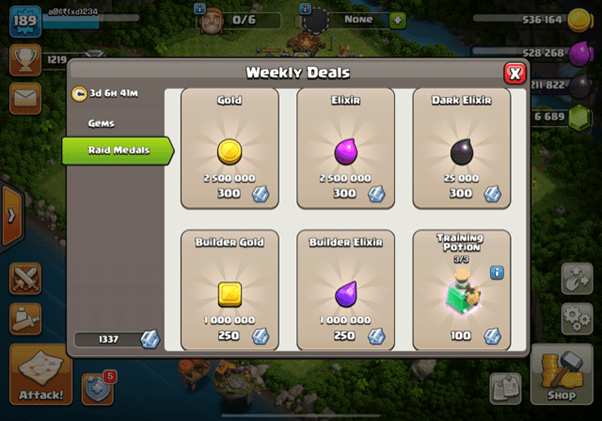
Every weekend, there are “raids” (attacks) that need to be done on other Clan Capitals. In return, one earns “raid medals” which can then be redeemed for various goodies.

Through the years, I have not spent a rupee on buying the in-game digital/virtual goods. But the time adds up. It’s fun and one also learns about gamification through the various tricks and tweaks CoC does to keep the interest going. (For example, they recently removed all training costs on troops encouraging gamers to attack much more.)

Mu can be thought of as doing something similar. It removes the financial element from the brand-customer equation – that has its own Loyalty 1.0 equation. What Mu does is bring in the non-monetary aspects into the equation. Give time (like in CoC), get rewards (like gems and medals in CoC) and then use those to ‘buy’ experiences (gold, elixir, dark elixir and various “Magic Items” in CoC). If all of this had cost money, I would have probably stopped playing it a long time ago.

What Mu therefore enables is for customers to ‘earn’ rewards in the form of Mu which can then give them exciting experiences that money cannot buy. In that sense, it “gamifies” our real world. And as far as I can tell, no one has done that before. This is what is unique about MuCo and Loyalty 2.0.

Thinks 586

NYTimes on 10 years of CRISPR: “The gene-editing technology has led to innovations in medicine, evolution and agriculture — and raised profound ethical questions about altering human DNA.”

WSJ on hypercasual games: “Mobile games that require little brainpower to play are becoming more sophisticated as their publishers try to cling on to fickle—and monetizable—players…“Hypercasual is still in its genesis phase with so much runway to be innovated on around this wonderfully pure notion of essentially a single gameplay loop,” said Clive Downie, senior vice president and general manager at Unity Technologies Inc., a 3-D content development platform that is used by hypercasual game designers. “Developers are looking for additional ways to add complexity and challenge to games.” Hypercasual’s popularity has boomed in the past two years. The number of hypercasual game downloads in 2021 increased to 15.6 billion from 12.6 billion in 2020 and 7.51 billion in 2019, according to Data.AI.”

Adrian Wooldridge: “It’s time to recognize that a new world is here to stay: We are at an early stage of a revolution in the distribution of work, driven by the miniaturization of smart machines and the ubiquity of the internet, that is as fundamental as the one that occurred with the industrial revolution in the 19th century and the office revolution of the early 20th century…It’s also time to recognize that both sides in the debate have a claim to be heard. Workers are right to want to work wherever they can be most productive. Forcing someone to endure a morale-sapping (and sometimes dangerous) commute just to keep a row of office desks filled is counterproductive. But employers are also right to worry that flexible work brings new problems. We need to shift the focus of the debate from the ideological to the practical — from the desirability of a change that is probably inevitable to the question of how to manage a distributed organization.”

The MuCo Future (Part 3)

Examples

I asked myself: which experiences would be costless for the brands I engage and transact with, and at the same time be priceless for me as a customer? In loyalty parlance, these are 1:100 rewards – cost is 1 for the brand and value is 100 for the customer. Airline miles are the best and most successful example. The incremental cost for an airline is just providing free meals (assuming the seat was anyway going empty), while the perceived value for the flyer is that of the actual cost of the ticket.

  • Daniel Silva is one of my favourite thriller authors. His new Gabriel Allon book, “Portrait of an Unknown Woman”, was published on July 19. I would have loved to get early access to the book by paying Mu (tokens).
  • A similar approach can be taken for releases on Netflix or other OTT platforms. I could have paid in Mu to get early access to the recent “Lincoln Lawyer” series on Amazon’s Prime Video.
  • We participate in many online webinars. Most of them have a chat box to type in the question; the moderator then picks a few for the presenter(s) to answer. I could use Mu to ensure my question is prioritised and answered.
  • Publishers could connect readers with authors. For example, I read Richard Rumelt’s book, “The Crux.” I would be keen to ask a few questions to the author – and Mu could be the passport for that conversation.
  • Influencers could do the same – offer their followers exclusive content in exchange for Mu.
  • Media companies could offer interactions with editors and journalists with payment by Mu as the entry (access) fee. Imagine being able to discuss the Ukraine crisis or the inflation scenario with the team at The Economist.
  • Content companies with paywalls could offer a Mu-based payment system for single articles (as an alternative to a full subscription package).
  • Samsung could offer early access to their new mobiles for Mu to long-standing Samsung mobile customers (like me).
  • Fashion companies could allow me to use Mu to unlock special features on their website (an Augmented Reality option, for example).
  • In a long queue at a shopping outlet, I could use Mu to get to the front of the line and checkout faster. A similar approach could be used at airports – not just for check-in but perhaps even at the security and immigration counters.

Most of these experiences do not happen today. It is because customers are reluctant to part with their money to pay for these and brands do not have an alternative ‘currency’ that they can accept. This is the friction that Mu can eliminate. Mu becomes the alternative – which customers earn with their actions delinked from spending. Because Mu is, in a sense, ‘free’, we would be more amenable to using it for optional and yet exclusive experiences. As customers start seeing value and utility for Mu, they will be keen to earn it – and that is where brands will benefit in the form of attention, data, referrals and reviews. Think of things that Mu can ‘buy’ as “digital goods” – akin to what happens in games.

Thinks 585

Siddharth Pai: “The point of a DAO is to act like a company in the blockchain world, one which is controlled directly by its stakeholders with no governance structures such as a board and executive management. DAOs have many of the same needs as today’s modern firms, but must deal with greater complexities, given their ‘virtual’ form of organization, fluidity and technical stack. DAOs are organized in a flat structure led by a group of core contributors. To make decisions, members submit proposals and vote on them using DAO “tokens” in full public view. Unlike in a corporation, where an employee needs to be vetted and interviewed before being hired and then promoted through to the company’s management, which governs the firm, some DAOs let anyone join while others require a minimum number of tokens (often cryptocurrency).”

Steven Horwitz on Austrian economics: “For Austrians, the fundamental issue is not whether markets get it right. True, Austrians think markets are pretty good and governments quite bad in that respect. And even though Austrians might explain things differently from the mainstream, there are plenty of mainstream economists who would agree with those general conclusions. Note, though, that the question here is still about getting it right. Where the Austrian view differs, I would argue, is in understanding that markets are also really good at helping people to know when resources are not optimally allocated and providing the signals and incentives needed to correct the mistakes. Being adept at getting things right at a given point is of course a good thing. But it is probably more valuable — given that we aren’t likely to get things perfectly right on a regular basis — to be able both to know when we are wrong and to have an incentive to do better.”

Matthew Hennessey: “Everybody dreams of a free lunch. Everybody wants something for nothing. Economists remind us that we’ll have to pay eventually because resources are scarce and life is about trade-offs.” [via CafeHayek]

The MuCo Future (Part 2)

Experiences

In Part 13 of the Loyalty 2.0 essay, I discussed various ideas for brands and their customers to exchange value via MuCo. In a sense, MuCo could enable a barter system – not linked to the products and services offered by brands, and delinked from the money being spent by customers. This barter system would help drive many actions that brands want done and power experiences customers want – both of which are not possible today because the entire focus is on driving transactions.

Brands miss out on the upstream (attention and data) and downstream (referrals and reviews). As I had written: “Attention is critical for everything else that follows. In a world of too much information, individuals can be lost; messages find it hard to get through; connections cannot be easily established. To instill loyalty, brands must solve the attention problem. This means building a pipe, a hotline to their customers … After attention comes data. Brands need to understand their customers better. While they can decode actions of individual customers on the website and app, the better approach is to simply ask customers and incentivise their actions (in this case, the data being provided voluntarily) … Revealing ourselves is both an opportunity to earn points and to ensure future communications are targeted for our particular tastes.”

Customers miss out on the softer experiences that could create a richer relationship with the brands. Think of these as the equivalent of “Community Chest” cards in Monopoly! As I had written: “[Mu Tokens could be used for] paying for unique and differentiated experiences on the three axes of access, ease and exclusivity. These are “priceless” in that brands (or influencers) are not “selling them”. For example, a bookstore can provide me early access to a book for some of my Mu tokens. So could the OTT platforms. A new electric car company could offer me a priority test drive. Artistes (creators) could offer priority access to their works in exchange for Mu tokens.”

In an essay on Velvet Rope Marketing (Part 2), I had written about three dimensions for providing differentiated experiences for Best customers – exclusivity, ease and access:

Exclusivity

  • Get premium samples free – from wishlist and new launches
  • Get a special page designed based on preferences – likes, new season, offers
  • Get notifications on topics of interest
  • Participate in product co-development
  • Cancel tickets or orders without loss

Ease

  • Pre-book a slot based on visit patterns, etc; get an assigned concierge
  • Get free exchange opportunities
  • Pick their own seats in advance (flight, theatre etc.)
  • Order service/product before arriving on-premise
  • Preferential treatment from customer service; first-in-line always

Access

  • Get invited to media events celebrating the brand’s loyal customers, to get first-look at products
  • First opportunity to book an order for limited edition apparel
  • Offers for orders similar to previous purchases
  • An earlier opportunity to buy tickets for upcoming events

Similar ideas could be used to power Loyalty 2.0 experiences which can only be unlocked by Mu tokens, thus demonstrating the value and utility of Mu tokens. Ideally, these should be costless for a brand and priceless for a customer.

Thinks 584

NYTimes: “Sabyasachi is looking to become not just India’s pre-eminent designer but one of its most high-end exports. As he opens his New York store this fall, he will also be finalizing a beauty line and preparing for next year’s jewelry pop-up (his third) inside Bergdorf Goodman…If his global expansion takes off, Sabyasachi will establish himself as a sort of Indian Ralph Lauren. “He sold the idea of good American living to middle-class Americans,” Sabyasachi said of Lauren, “and I’ve sold the idea of good Indian living to middle-class Indians.” His West Village store will, he hopes, introduce Americans to the painstaking art and exuberance of Indian weaves, embroidery and craft. When a friend fretted to him about the location’s not being near a designer hub, Sabyasachi answered: “I’ll create my destination. When you build something very beautiful, people will find you.””

Mike Novogratz: “You have to put things in perspective. If I told you at the beginning of the pandemic you could buy Zoom stock or bitcoin — today you would have doubled your money on bitcoin and you’d have made nothing on Zoom. So that’s what I think is hard for people to get their heads around. This has been a complete and total old-school ass-beating. But it’s important not to throw the baby out with the bathwater because we had a speculative mania in lots of asset classes. Bitcoin is not going away as a macro asset. Web3 is not going away. We’ll spend more time in the metaverse, therefore companies will sell digital assets, and for digital assets to have value, they have to be unique, and to be unique, they have to live in a blockchain.”

Ishan Bakshi: “There aren’t that many [Indian] consumers with significant discretionary spending capacity, and those with capacity aren’t increasing their spending…Take Zomato, for instance. In 2021-22, 535 million orders for food delivery were placed on the platform. Considering that the company has 50 million annual transacting consumers, this translates to just under 11 orders per customer for the entire year or less than one order per customer per month. Of these 50 million customers, only 15 million transacted at least once a month, while 1.8 million did so once a week. In the case of Nykaa, the average monthly unique visitors range from around 16 million for the fashion vertical to 21 million for the beauty and personal care products. However, the number of transacting customers is only 1.8 million and 8.4 million respectively. Similarly, while Policy Bazaar has around 59 million registered customers, only 11.8 million are unique purchasing customers.”